
A drone strike that set part of the United Arab Emirates’ only nuclear power plant on fire is testing a shaky Iran ceasefire as President Trump warns Tehran that “the clock is ticking.”
Drone Strike Hits Critical Nuclear Infrastructure, Raises War Fears
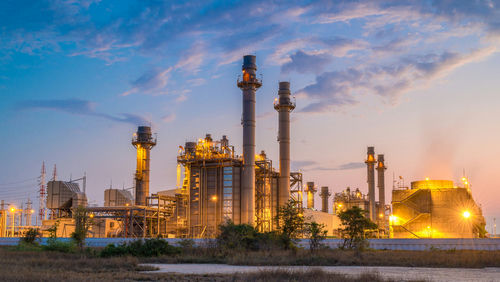
United Arab Emirates officials say three drones approached their Barakah nuclear power plant on Sunday, with air defenses downing two and a third striking an electrical generator on the plant’s perimeter, igniting a fire in one of the most sensitive facilities in the Arab world.[3][5] Authorities stressed there was no impact on the reactors themselves, but acknowledged that Barakah supplies roughly a quarter of the country’s electricity, making this not only a security incident but a direct attack on critical civilian infrastructure.[2][5]
The Emirati foreign ministry publicly described the incident as a “terrorist attack” and declared that the United Arab Emirates reserves the right to respond, including militarily, once the perpetrator is identified.[3][5] Officials stated the drones entered from the country’s western border, an approach that points toward Iran or Iranian-backed militias but has not yet been confirmed forensically.[3][5] No state or group has claimed responsibility, leaving a dangerous attribution vacuum that could fuel rapid escalation across an already volatile region.[2][5]
No Radiation Release, but a Nuclear Security Red Line Was Tested
The United Arab Emirates’ nuclear regulator reported that the blaze was contained at an electrical generator and did not compromise radiological safety, and said all units remained operating normally after the attack.[4][5] The International Atomic Energy Agency, the United Nations’ nuclear watchdog, confirmed it had been informed that radiation levels at Barakah stayed within normal ranges and that no injuries were reported, though one reactor temporarily switched to emergency diesel generators as a precaution.[5] That combination underscores how close this came to a far worse crisis.
Multiple independent outlets, including international broadcasters and wire services, converged on the same basic fact pattern: a drone strike near the Barakah facility, a fire at or near an electrical generator outside the inner reactor perimeter, no reported casualties, and no radiological release.[1][2][3][4][5] That consistency strengthens confidence that this was not an internal accident or a false alarm, but a real hostile strike deliberately carried out in the vicinity of a civilian nuclear plant.[3][5] For conservatives, it is another reminder that America’s partners are being probed exactly at their most vulnerable energy and infrastructure points.
Trump’s “Clock Is Ticking” Warning and the Proxy War Problem
The strike hit as the United States and Iran sit in a tense ceasefire, with both sides signaling they are ready to resume open conflict if pushed.[2][5] Reporting notes that Iran and its allied Shiite militias in Iraq have previously used drones to strike Gulf Arab targets during the broader war, a pattern that shapes how regional governments now view any attack like this even before hard attribution evidence is released.[2][5] That history is why the drone raid on Barakah is being interpreted as part of a gray-zone campaign, not an isolated incident.
The UAE condemns drone strike causing fire outside nuclear planthttps://t.co/fzGdEvcGaW
— The New Arab (@The_NewArab) May 17, 2026
At the same time, the lack of public forensic proof tying the drones to a specific launcher highlights an uncomfortable truth for policy makers: hostile actors are exploiting deniability to hit critical infrastructure while calculating that Washington will hesitate to respond without airtight evidence.[3][5] Analysts warn that this information vacuum allows speculation and prior bias about Iran and its proxies to fill the gap, potentially locking governments into escalation paths before investigators can finish the technical work conservatives would demand in any serious case.[3][5]
Why This Matters for American Security, Energy Policy, and Deterrence
The Barakah incident lands at a time when many American families are already dealing with the fallout from years of globalist energy experiments, green mandates, and supply shocks that drove up power and fuel costs.[5] The United Arab Emirates built its twenty billion dollar nuclear plant to secure reliable baseload electricity and reduce dependence on volatile oil markets, much as conservatives argue the United States should safeguard its own domestic energy grid.[5] A drone strike against such a facility shows exactly how fragile that security becomes when hostile regimes and militias sense weakness or confusion in American policy.
For a Trump-era foreign policy that promises peace through strength, this is a critical test of deterrence. The president has warned Tehran that “the clock is ticking,” making clear that continued proxy harassment of American allies, especially around nuclear and energy sites, will not be tolerated indefinitely. While attribution in this case remains publicly unconfirmed, the pattern of past drone and missile attacks linked to Iran’s network is well documented.[2][5] The challenge now is to balance prudence about evidence with a firm response that convinces bad actors they cannot play near nuclear facilities without severe consequences.
Sources:
[1] YouTube – UAE reports fire near Barakah nuclear facility after …
[2] YouTube – LIVE: UAE Reports Drone Strike Near Nuclear Plant Amid …
[3] YouTube – Drone strike reported near Abu Dhabi nuclear plant
[4] YouTube – UAE Drone Attack LIVE | Abu Dhabi Nuclear Power Plant …
[5] Web – Drone strikes UAE nuclear plant as US and Iran signal they …