

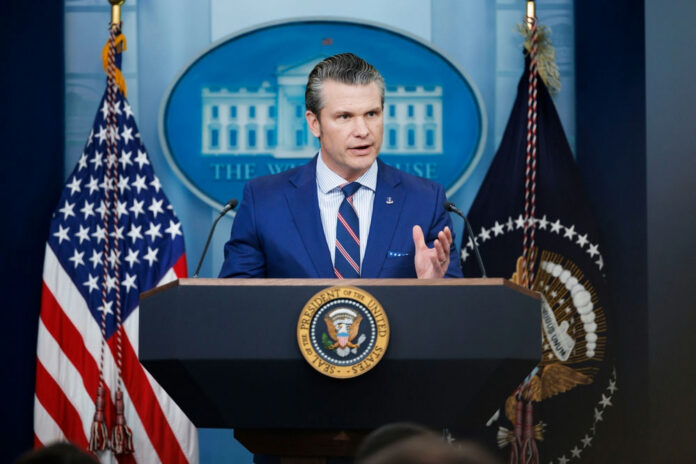
Secretary of War Pete Hegseth has issued a stark ultimatum to America’s allies: those who fail to meet their defense spending commitments will face tangible consequences as the Trump administration ends decades of U.S. subsidization of wealthy nations’ security.
Trump Administration Ends Alliance Subsidies
Secretary of War Pete Hegseth delivered an unequivocal message at the Reagan National Defense Forum on December 7, 2025, declaring the era of American taxpayers subsidizing wealthy allies’ defense has ended. Hegseth emphasized that nations capable of funding their own security but choosing not to will face unspecified consequences, marking a significant departure from post-World War II alliance management. The warning follows the release of the White House National Security Strategy urging partners to assume primary responsibility for regional defense, reflecting President Trump’s long-standing frustration with burden-sharing inequities that have persisted for decades.
Historic NATO Spending Commitment Raises Stakes
The 2025 NATO Hague Summit produced an unprecedented agreement requiring allies to dedicate 5% of GDP to defense, comprising 3.5% for core military capabilities and 1.5% for security investments. This commitment represents more than double the previous 2% target that many nations failed to meet, addressing longstanding conservative concerns about European free-riding on American military might. Hegseth characterized the agreement as “impossible” just five years ago, crediting Trump’s aggressive diplomacy for achieving what previous administrations could not. The deal also shifts primary responsibility for Europe’s conventional defense to European nations themselves under NATO Article 3 provisions for self-help and mutual aid.
Winners and Laggards in Alliance Burden-Sharing
Hegseth singled out South Korea as a model ally for pledging 3.5% of GDP to defense amid Indo-Pacific tensions, while expressing optimism that Japan would follow suit “in a few years.” Germany and Poland received commendation for committing to the full 5% NATO target and advancing what Hegseth called “combat credible forces” through initiatives like the Pearl defense investment program. The Secretary’s pointed remarks about certain allies needing to “step up” suggest nations failing to meet commitments may face reduced U.S. security cooperation or favor in bilateral relationships, fundamentally altering power dynamics within alliances where Washington has historically tolerated fiscal underperformance.
Taxpayer Relief and Strategic Realignment
The policy shift aims to relieve American taxpayers from subsidizing defense for economically capable partners while redirecting U.S. resources toward domestic priorities and genuine strategic threats. Hegseth framed the approach as preserving resources for Americans’ “life, liberty, and pursuit of happiness” rather than underwriting security for nations that can afford their own. Short-term impacts include increased pressure on defense laggards to boost military budgets, potentially straining domestic political coalitions in allied democracies. Long-term implications point toward stronger allied military capabilities, enhanced deterrence against Russia and China, and reduced U.S. troop exposure in foreign theaters, though alliance fractures remain possible if commitments go unmet.
This approach represents a pragmatic recalibration of alliances built for a different era, one where prosperous European and Asian partners shoulder responsibilities commensurate with their wealth and strategic interests. For Americans tired of seeing their tax dollars fund other nations’ defense while domestic infrastructure crumbles and social programs face cuts, Hegseth’s warnings signal accountability is finally arriving. Whether allies respond with action or resistance will determine if Trump’s “peace through strength” doctrine succeeds in creating truly mutual defense partnerships or accelerates the fracturing of traditional security arrangements that have defined the post-war order.
Sources:
‘Free-riding’ U.S. allies that don’t step up ‘will face consequences’ – The Japan Times
Remarks by Secretary of War Pete Hegseth at the Reagan National Defense Forum