
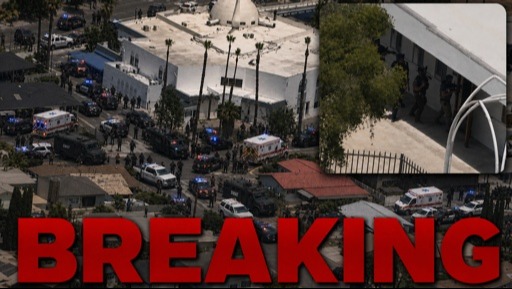
Police say a lone security guard’s split-second response at a San Diego mosque kept a hate-fueled attack from becoming a mass-casualty nightmare, but the public record still leaves crucial blanks. [1]
Story Snapshot
- Police credited security guard Amin Abdullah with a “pivotal” role in limiting harm, and authorities said his actions likely saved lives. [1]
- The shooting unfolded while children were present at the Islamic Center of San Diego, heightening the stakes of any defensive response. [2]
- Two teenage suspects were later found dead in a vehicle near the center as police converged, and investigators recovered anti-Islamic writings. [1]
- Officials are probing the incident as a hate crime while withholding detailed timelines and forensic reconstruction pending investigation. [1]
What Officials Say Happened And Why It Matters
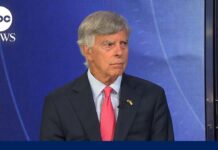
San Diego’s police chief publicly framed the mosque’s security guard, identified by the Islamic Center as Amin Abdullah, as instrumental in preventing greater loss of life during the shooting, language echoed by national coverage that called his actions “heroic” and life-saving. [1] The claim carries weight because the attack intersected with a school session on site. Young children ran for safety, making any swift alarm or corridor-blocking action potentially decisive in reducing casualties. [2] The moral center of this narrative rests on Abdullah’s presence and initiative. [1]
Authorities later located the teenage suspects dead in a vehicle stopped on a nearby road, a development consistent with a disrupted attack sequence rather than a prolonged assault inside the complex. [1] Police also reported anti-Islamic writings recovered from that vehicle and opened a hate-crime investigation, which establishes motive contours and underscores the vulnerability of the target. [1] That combination—aborted timeline, targeted site, and a named defender—explains why officials emphasize the guard’s contribution while the deeper forensics remain pending. [1]
The Open Questions That Decide How Much Was Prevented
The case file available to the public does not outline minute-by-minute actions that Abdullah took, whether he physically confronted attackers, triggered a lockdown, or directed evacuees through specific routes. [1][2] No on-record eyewitness account currently describes his exact maneuvers, and no body-worn camera transcript or official after-action chronology has been released to lock down sequence and causation. [1][2] Without that chain, quantifying exactly how many victims were spared remains an inference rather than a demonstrable count, even if the broad direction of the claim proves correct. [1]
Investigators can close those gaps with standard steps: incident reports, dispatch audio, surveillance pulls, and ballistic mapping that tie positions, angles, and intervals together. That evidence would show whether the attackers disengaged because of defensive friction at the perimeter, confusion, time pressure from oncoming police, or their own preplanned exit. Until then, officials’ attribution to Abdullah stands as a credible working assessment that aligns with common outcomes in interrupted attacks, but one that awaits documentary verification. [1][2]
Hate-Crime Lens, Public Safety Reality, And Conservative Common Sense
The presence of anti-Islamic writings and a hate-crime probe tells the community what they already feel viscerally: the mosque was the intended target. [1] That fact should guide prevention: harden entrances, formalize drills, and ensure trained, empowered guardians at community institutions where children gather. That is not culture-war theater; it is practical safety. Early praise for a protector can risk outrunning the forensics, but the values at stake—responsibility, preparedness, and courage under fire—do not depend on perfect hindsight to be worth pursuing tomorrow morning. [1][2]
UPDATE: Three individuals killed in the Islamic Center of San Diego Shooting were identified by Imam Taha Hassane, Director of the Islamic Center of San Diego: https://t.co/DedloNKVXl pic.twitter.com/9QvtmGTx4U
— WTVC NewsChannel 9 (@newschannelnine) May 19, 2026
Public trust will rest on transparency. Authorities should promptly release a timeline and relevant recordings once investigative integrity allows, so families learn not only that lives were likely saved, but how. That knowledge teaches other congregations to copy what worked and fix what failed. When officials anchor praise in evidence, they honor the fallen, the survivors, and the man they credit with buying precious seconds. That is how a tragic night becomes a safety manual rather than just a headline. [1][2]
Sources:
[1] Web – Islamic Center of San Diego shooting: Teenage suspects identified …
[2] YouTube – Student describes hearing gunshots at Islamic Center of San Diego …