
Cuban President Miguel Díaz-Canel issued a stark warning that any U.S. military strike on his communist island would unleash a “bloodbath” with catastrophic regional consequences, responding to leaked intelligence reports that Havana has acquired hundreds of military drones and discussed attacks on American targets including Guantánamo Bay and Key West.
Intelligence Leak Sparks War of Words
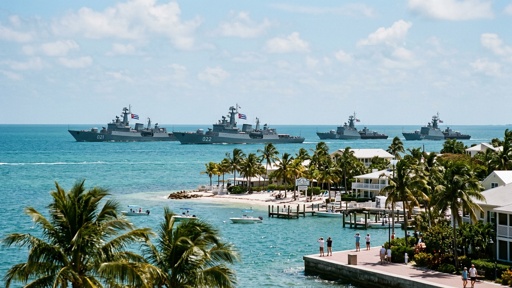
Axios reported Sunday that classified U.S. intelligence assessments indicate Cuba has obtained more than 300 military drones and engaged in discussions about attacking the U.S. naval base at Guantánamo Bay, American naval vessels, and potentially Key West in Florida. The report cited concerns within intelligence circles that such assessments could be weaponized as justification for preemptive U.S. strikes against Cuban military infrastructure. The leak immediately triggered alarm bells in Havana, where officials view Washington’s historical record of regime-change operations and covert actions with deep suspicion rooted in six decades of Cold War-era confrontation.
Havana Rejects Drone Allegations as Manufactured Crisis
President Díaz-Canel responded Monday with a lengthy statement on X, flatly denying Cuba poses any threat to the United States and insisting American defense and intelligence agencies “know full well” his government has no aggressive plans against any nation. He characterized any U.S. threat of military force as violating international law under the UN Charter, which prohibits unprovoked aggression and guarantees nations’ rights to self-defense. Cuban Foreign Minister Bruno Rodríguez Parrilla amplified this message, warning that those seeking to justify attacks on Cuba employ “false pretexts” and stressing Cuba’s legitimate right to defend itself under international legal frameworks established after World War II.
🚨 CUBA WARNS U.S. MILITARY ACTION WOULD TRIGGER A “BLOODBATH”
Cuban President Miguel Díaz-Canel warned that any U.S. military action against Cuba would lead to a “bloodbath” with major consequences for regional stability.
The warning came after reports claimed Cuba had… pic.twitter.com/unbRIH22WD
— NewsForce (@Newsforce) May 18, 2026
Historical Echoes of False Intelligence and Pretext Wars
Cuban officials’ invocation of “false pretexts” deliberately echoes international skepticism about U.S. intelligence used to justify previous military interventions, most notably the 2003 Iraq War launched over weapons of mass destruction that were never found. Declassified Cold War documents such as Operation Northwoods reveal U.S. military planners in 1962 contemplated fabricating incidents to justify invading Cuba, plans ultimately rejected but never forgotten in Havana. This historical backdrop feeds Cuban suspicions that drone allegations represent manufactured intelligence designed to create political cover for military action advocated by hawkish elements within American politics who view Cuba as a strategic threat aligned with adversaries like Russia, China, and Iran.
Trump Administration Faces Complex Strategic Calculus
The Trump administration now confronts difficult choices balancing legitimate security concerns about asymmetric drone threats against the enormous risks of military escalation just 90 miles from Florida. Any strike would face international legal scrutiny, likely provoke unified opposition from Latin American governments, and risk igniting a broader regional crisis with unpredictable humanitarian consequences. Cuba’s military capabilities pale compared to American power, but Havana could impose significant costs through guerrilla tactics, cyber operations, and appealing to international law and public opinion worldwide. The communist regime also retains alliances with Russia and Venezuela that could complicate U.S. strategic calculations and potentially draw in external actors seeking to exploit American overreach in the Western Hemisphere.
US military attack on Cuba would trigger ‘bloodbath,’ says Cuban president https://t.co/o8SADBDZiN
— POLITICO (@politico) May 18, 2026
Regional Stability Hangs in Balance
The standoff highlights how modern drone proliferation creates new security dilemmas even between vastly mismatched adversaries. Low-cost unmanned aerial systems have transformed asymmetric warfare from Ukraine to Yemen, making credible threats accessible to smaller nations and non-state actors alike. Whether Cuba actually possesses the alleged drone arsenal or harbors offensive intentions remains publicly unverified, with the intelligence assessment still classified and details contested by Havana. The episode underscores the critical need for verified intelligence and measured responses before any kinetic action that could destabilize the Caribbean and undermine broader U.S. strategic interests across Latin America for years to come.
Sources:
Cuban president says there would be a ‘bloodbath’ if US military attacks country – CNY Central
US military attack on Cuba would trigger ‘bloodbath,’ says Cuban president – POLITICO