
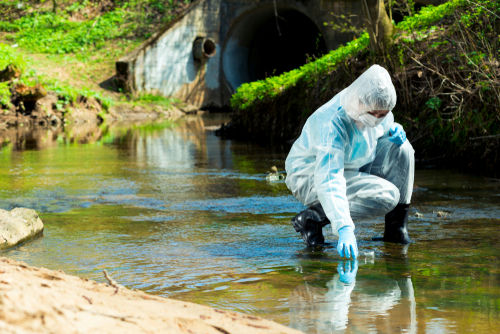
America’s enemies are probing our drinking water with a keyboard while most utilities still leave the digital back door wide open.
Story Snapshot
- Federal agencies say Iran-linked hackers have already disrupted industrial controllers used in U.S. water and energy systems, causing operational and financial damage.
- Hundreds of water utilities run internet‑exposed equipment with weak security, giving foreign actors a cheap way to threaten public health without firing a shot.
- Officials confirm active exploitation and disruption but will not name specific utilities or show detailed evidence, fueling public mistrust of both government and infrastructure.
- The same Washington that spends trillions abroad has left small, fragmented local water systems to fend for themselves on cybersecurity.
Federal Warning: Iran-Linked Hackers Hitting Critical Infrastructure
The Environmental Protection Agency (EPA), Federal Bureau of Investigation (FBI), Cybersecurity and Infrastructure Security Agency (CISA), and National Security Agency (NSA) jointly warned that Iran-affiliated hackers are carrying out an “urgent and ongoing” cyber campaign against U.S. organizations, explicitly including the water sector.[3] The advisory says attackers are exploiting weaknesses in operational technology that runs drinking water and wastewater systems, leading in some cases to exploitation and disruption of those systems.[3] These are the industrial computers that open valves, mix chemicals, and manage pumps.
According to the advisory, multiple critical-infrastructure organizations have reported configuration wiping, software-based tampering with mechanical sensors, and disruption of human-machine interface screens that operators use to monitor real-time conditions.[3] Officials state that this activity has already produced “operational disruption and financial loss,” although they do not quantify the damage.[3] A separate joint alert involving the FBI and CISA says Iran-linked actors have been targeting internet-facing devices at critical infrastructure sites, including water, energy, and municipal facilities, confirming that these are not just theoretical scans but real intrusions.[1]
Iran-Linked Hackers Are Targeting America's Water Systems – Most Still Lack Basic Security https://t.co/nExtm7njlb
— A.C. Spollen (@ACSpollen) June 3, 2026
How Iran-Linked Hackers Exploit Basic Cyber Weaknesses
Federal agencies and independent reporting point to a specific weak spot: industrial controllers made by Rockwell Automation under the Allen-Bradley brand, widely used in water plants and other facilities.[1][3] A key vulnerability in Rockwell’s Logix family allows attackers to bypass authentication, steal a cryptographic key, and connect unauthorized software to these controllers.[1] Hackers have used this path to manipulate data on human-machine interfaces and supervisory control displays, potentially misleading operators about what is happening in pipes and tanks.[1]
Cybersecurity analysts told investigators that more than 3,000 Rockwell devices remain directly exposed on the public internet, sometimes because operators do not realize the equipment is reachable from outside or underestimate the risk.[1] Earlier campaigns by Iran-linked groups against other brands of controllers during the 2023–2024 Gaza war showed similar tactics, and dozens of U.S. water utilities were compromised when weak configurations left gear open to the world.[1] In the current wave, U.S. agencies say some victims were forced to shut down automated processes and switch to manual control, a last-resort step that confirms real operational disruption.[4]
Water Systems: Soft Targets in a Hard World
The EPA’s statement underlines that the water sector remains an “attractive target” and continues to face threats from groups seeking to disrupt U.S. critical infrastructure.[3] Unlike the large, well-funded players in finance or defense, America’s drinking water is delivered by thousands of fragmented local utilities, many with aging equipment, thin budgets, and little in-house cybersecurity expertise.[3] That patchwork structure makes it easy for hostile foreign actors to find the weakest link and exploit it while Washington and state regulators argue over rules and funding.
Cybersecurity Dive reports that hundreds of U.S. water systems have already been found with weak security configurations, and in dozens of cases water utilities were actually compromised in prior campaigns.[1] The new advisory confirms that exploitation and disruption are again occurring at drinking water and wastewater systems, but it does not name specific plants or cities.[3] For citizens who already believe the federal government protects insiders first and leaves ordinary communities exposed, the idea that foreign hackers can quietly tamper with local water operations will reinforce a sense that basic American needs are not being defended.
Opacity, Accountability, and a System That Feels Rigged
Reporting by Politico notes that even industry insiders were briefed privately while the public was told only broad outlines and no specific victim names.[2] The exact targets of the attacks “were not immediately clear,” leaving outsiders to rely on general assurances.[2] The advisory also does not publish forensic details such as network logs or malware samples, so the strongest evidence stays behind government or corporate walls.[2][3] That secrecy is common in national security, but it deepens the perception that the public is kept in the dark until after something goes badly wrong.
For conservatives, the story fits a pattern: after years of massive federal spending and focus on overseas conflicts, basic infrastructure at home is still exposed, even as regulators talk endlessly about climate plans and diversity agendas.[1][3] For liberals, it highlights how smaller communities and working families carry the risk while large vendors and federal agencies dominate the narrative and avoid full transparency.[1][2] Across the spectrum, Americans who already distrust the “deep state” see another example of a government that can surveil its own citizens in detail yet cannot guarantee that foreign hackers are not flipping digital switches at the local water plant.
Sources:
[1] Web – Iran-Linked Hackers Are Targeting America’s Water Systems – Most Still …
[2] Web – Iran-linked hackers target water, energy in US, FBI and CISA warn
[3] Web – EPA, FBI, CISA, NSA Issue Joint Cybersecurity Advisory to Water …
[4] Web – Iranian hackers are targeting US energy and water sectors, federal …