
President Donald Trump’s warning that Iran “will no longer exist” if the United States escalates its response turns a disputed drone clash in a narrow waterway into a stark question about how far Washington’s leaders are willing to go—and what that means for ordinary Americans who already feel their government is reckless, unaccountable, and out of control.
Story Snapshot
- Trump vows Iran “will no longer exist” if the U.S. chooses to escalate after a drone attack on ships near the Strait of Hormuz.
- U.S. commanders say Iran launched drones and other weapons at American destroyers and a cargo ship, while Iran flatly denies firing anything.
- A fragile ceasefire and global oil supplies hang in the balance as both sides blame each other and shipping traffic stays near historic lows.
- Legal experts and human rights groups warn Trump’s annihilation language and threats to hit civilian infrastructure could amount to war crimes.
What Trump Said And Why It Matters
President Donald Trump has shifted from talking about “deals” to using the language of outright annihilation toward Iran. In recent weeks he warned that a “whole civilization will die tonight, never to be brought back again” if Iran does not reopen the Strait of Hormuz and accept his terms. He has also said Iran could be “taken out in one night” and that if Tehran attacks him or American targets, the country could be “eliminated from the face of the earth.” These are not offhand jokes; they are repeated threats tied to concrete deadlines and conditions, including control of the strait and alleged Iranian strikes on ships. For many Americans, right and left, this kind of talk feeds a deep fear that presidents now treat war—and even talk of wiping out nations—as a personal tool, unchecked by law, morality, or basic common sense.
Trump’s rhetoric is not only emotional; it targets the basic systems that keep civilians alive. He has threatened the “complete demolition” of Iran’s power plants and bridges if Iran does not reopen the strait, even though these are civilian infrastructure that millions rely on for water, hospital care, food, and electricity. Amnesty International’s secretary general called these “apocalyptic threats” and warned that intentionally attacking civilian infrastructure would be a war crime under international law. Military law experts agree that strikes on power grids and bridges can be illegal if they cause disproportionate harm to civilians or are not tied to clear military necessity. When a president shrugs off these rules, it reinforces a wider belief across the political spectrum that America’s leaders see themselves as above the law, whether at home or abroad.
What Happened In The Strait Of Hormuz
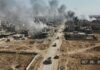
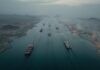
The immediate trigger for Trump’s latest warning was a clash near the Strait of Hormuz, the narrow channel that carries much of the world’s oil. U.S. Central Command says Iranian forces launched multiple missiles, drones, and small boats at American Navy destroyers passing through the area, and that a suspected Iranian one-way drone hit a Singapore-flagged cargo ship’s upper deck, damaging it but not injuring crew. Retired General Jack Keane called the attack a “clear ceasefire violation,” while Trump labeled it a “foolish violation” of the terms he says Iran agreed to. At the same time, Defense Secretary Pete Hegseth and General Dan Caine, chairman of the Joint Chiefs of Staff, insist the ceasefire is “not over” and describe more than ten Iranian attacks as serious but still below the level of full-scale combat. That mixed messaging makes it harder for citizens to know whether the country is at peace, at war, or somewhere in a gray zone where accountability disappears.
Iran’s leaders tell a very different story. The Islamic Revolutionary Guard Corps has officially claimed that Iran “has absolutely not carried out any launches toward any country during the ceasefire hours.” Iranian state television alleges that it was the United States that breached the ceasefire by striking targets near the strait, saying Iran only fired on a tanker moving from its coastal waters after U.S. aggression. Revolutionary Guard spokesmen also boast that no U.S. warship has “dared” approach the Strait of Hormuz, contradicting American claims of escorting vessels through the choke point. Iran’s deputy foreign minister argues Washington cannot “have both war and ceasefire,” pointing to Israeli strikes on Lebanon as proof that the U.S. side is breaking the spirit of the agreement. As in past Gulf tanker crises, each side claims the other shot first, and there is no independent public evidence clear enough to settle the dispute.
A Fragile Ceasefire And A Strangled Global Economy
The fight over drones and blame comes on top of a larger war that has already wrecked shipping and energy markets. On February 28, 2026, the United States and Israel launched major strikes on Iran under Operation Epic Fury, killing Supreme Leader Ali Khamenei. Iran retaliated with missiles, drones, and sea mines, and its guards declared the strait closed, driving global natural gas supplies down by an estimated 20 percent. A fragile two-week ceasefire announced in early April brought some relief, but Iran kept tight control of strait access, and nearly 187 tankers with roughly 172 million barrels of oil and fuel remained stuck inside the Gulf. Traffic through Hormuz dropped more than 95 percent, to about 5 percent of pre-war levels, creating shortages of refined products, especially in Asia. Each new clash or threat—like Trump’s promise to “blast Iran into oblivion” or Iran’s talk of closure over Israeli strikes—shakes markets yet again.
U.S. WEIGHING PULLING FORCES OUT OF SAUDI ARABIA
🇸🇦🇺🇸 Hormuz Fight DRIVES Saudi Arabia Away From the U.S., Towards Iran
Over 100 U.S. aircraft were airborne for Project Freedom, Trump's push to force open the Strait of Hormuz, when Saudi Arabia barred Prince Sultan Airbase and… pic.twitter.com/QEoAWpzQUq
— Ryan Rozbiani (@RyanRozbiani) July 1, 2026
For Americans, this is not just a distant maritime drama; it hits wallets and deep worries about the country’s direction. Oil prices have spiked and swung as the strait’s status changes, contributing to already high energy costs that both conservatives and liberals blame on years of bad policy, corporate greed, and government chaos. Meanwhile, reports of a $500 million investment from the United Arab Emirates into a Trump family cryptocurrency firm, timed near U.S. approvals of new arms sales, have raised serious questions about conflicts of interest and motives behind U.S. moves in the Gulf. Critics in Congress are calling for hearings on possible corruption and self-enrichment, but the White House has stayed publicly silent, feeding the sense that a “deep state” of elites and insiders is getting rich while regular citizens pay more at the pump and watch the risk of a wider war grow. When a president threatens to erase another nation from the map while business ties and opaque deals swirl in the background, many Americans see confirmation that the federal government is not acting mainly for their safety or prosperity—but for its own power.
Sources:
mediaite.com, gulfnews.com, cnbc.com, nbcnews.com, gmanetwork.com, youtube.com, cbsnews.com, rferl.org, eprinc.org, britannica.com, facebook.com, instagram.com