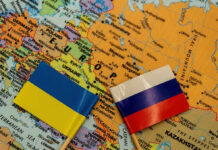

As Ukraine’s president publicly challenges Vladimir Putin to meet face-to-face on neutral ground, the world is watching to see whether this is a real path to peace or just another performance by leaders who keep ordinary people paying the price for their decisions.
Story Snapshot
- Ukraine’s Volodymyr Zelensky has issued an open letter proposing a direct meeting with Vladimir Putin and a full ceasefire during talks.[1][2][5]
- The Kremlin replied that Zelensky can come to Moscow “any time,” pushing negotiations back onto Russia’s terms and territory.[1][3][4]
- Zelensky wants a neutral venue such as Switzerland, Turkey, or an Arab state, signaling distrust of Russian guarantees and of great-power backroom deals.[2][4][5]
- Donald Trump has welcomed the idea of a summit and urged “compromise,” raising questions about what kind of deal Washington’s political class might quietly accept.[1]
Zelensky’s Neutral-Ground Proposal and Why It Matters
Ukrainian President Volodymyr Zelensky has published a rare open letter to Russian President Vladimir Putin proposing a direct leader-to-leader meeting to “end this war through direct engagement between us – and you.”[1][2][5] Zelensky calls for setting a clear date and says Ukraine is ready for a full ceasefire for the duration of negotiations, effectively offering to silence the guns while the two leaders talk.[1][2][3] He frames the summit as the only way to resolve key issues that lower-level talks have failed to address.[4][5]
Zelensky emphasizes that the talks should be held in a neutral country, pointing to locations such as Switzerland, Turkey, or Arab states that have played hosting roles in past diplomatic efforts.[2][4][5] His letter explicitly rules out traveling to Russia, describing negotiations on Russian soil as out of the question and too dangerous for Ukraine.[4] By insisting on neutral ground, Zelensky signals distrust not only of the Kremlin’s security promises but also of a diplomatic process dominated by the same powerful players many citizens already see as an unaccountable global elite.[2][4][5]
The Kremlin’s Counter: Moscow or No Real Talks
The Kremlin’s initial reaction has been to say Putin has not yet read the letter while stating that Zelensky is welcome to come to Moscow “any time.”[1][3][4] Russian spokesman Dmitry Peskov’s invitation directly undercuts the neutral-site framework, shifting the conversation from “if” leaders should talk to “where” and “on whose terms” they would talk.[1][3] Russian state media have reinforced the idea that any meeting must happen on Russian territory, presenting this as normal diplomacy rather than a power play over symbolism and security.[3][4]
Putin has repeatedly said he is ready to negotiate but only on the basis of prior understandings and territorial concessions discussed at earlier meetings, including a 2025 session in Anchorage with President Donald Trump and Zelensky.[1][4][6] Russian messaging links any future summit to Ukraine accepting Russian control over areas like the Donbas region and recognizing the battlefield status quo.[4] That approach allows Moscow to sound open to “peace” while making it politically costly for Zelensky to accept, especially when millions of Ukrainians and their supporters see such concessions as rewarding aggression.[4][6]
Trump’s Role and American Distrust of the Foreign Policy Establishment
United States President Donald Trump has publicly backed the idea of a Putin–Zelensky face-to-face meeting, calling it “great” and urging both sides to compromise.[1] Trump has long claimed he could end the war quickly if both leaders were willing to cut a deal, and the Anchorage meeting he hosted in 2025 already produced talk of ceasefires tied to Russian approval.[4][6] For many Americans, such diplomacy sounds less like principled peace-making and more like transactional bargaining done over the heads of ordinary citizens and soldiers.[1][4][6]
Putin Shuts Down Zelensky Meeting, Calls Letter 'Rude':
Russian President Vladimir Putin dismissed Ukrainian President Volodymyr Zelensky’s call for direct talks, saying there was “no point” in meeting face-to-face for now.
Zelensky sent an open letter Thursday requesting… pic.twitter.com/D4eGFaZtii
— ELEYELE Olajide (@OlajideEleyele) June 5, 2026
Older conservatives who support an “America First” approach worry that United States involvement in European wars drains resources while their own border remains porous and prices keep rising. Older liberals, meanwhile, are wary that rushed compromises could validate aggression and deepen the sense that powerful states ignore international law when it is inconvenient. Both groups share a deeper concern: decisions about war and peace are being shaped by a small circle of leaders, advisers, and donors who rarely bear the direct consequences of their choices.[4][6]
Peace Offer or Public Relations? What the Pattern Suggests
Diplomatic history of the Russia–Ukraine war shows a repeated pattern: one side announces an openness to ceasefire and direct talks, while the other answers with conditions that make genuine compromise unlikely.[4] Since 2025, Zelensky has repeatedly floated unconditional or time-limited ceasefires, and Russia has just as consistently pushed demands tied to territorial control and prior agreements.[4][6] Each side uses public offers to shape blame and influence domestic and international opinion, portraying itself as reasonable and the other as the obstacle to peace.[4]
This latest exchange fits that pattern. Zelensky’s open letter places moral and political pressure on Moscow by putting a clear proposal on the table, while the Kremlin’s Moscow-only invitation allows Russia to claim it is “ready to talk” without bending on core issues or venues.[1][3][4] For citizens in the United States and Europe who already distrust the global political class, the danger is that “peace talks” become just another talking point, used to manage news cycles rather than to end the suffering of people on both sides of the front line.[1][4]
Sources:
[1] Web – Zelensky Proposes Meeting with Putin on Ending War
[2] YouTube – War in Ukraine: Zelensky proposes face-to-face meeting with Putin …
[3] YouTube – In open letter to Putin, Zelensky calls for meeting and ceasefire
[4] YouTube – Ukraine’s Zelenskyy Proposes Peace Talks in Letter to Putin
[5] YouTube – Ukrainian President Zelensky Write Open Letter To Putin …
[6] Web – In Open Letter to Putin, Zelensky Calls for Meeting and Ceasefire