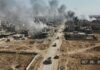

Indian police using batons and tear gas on exam protesters marching toward Parliament should worry every American who still believes in free speech and fair elections.
Story Snapshot
- India’s youth-led Cockroach Janta Party marched on Parliament over exam leaks and education failures.
- Police banned the march, shut metro stations, and used tear gas and batons on largely peaceful protesters.
- Protesters demanded the resignation of Education Minister Dharmendra Pradhan and justice for students who died by suicide.
- The movement shows how angry Gen Z can reshape politics when schools, jobs, and basic fairness break down.
Gen Z march on Parliament over exam leaks and lost futures
Thousands of young Indians, parents, and activists gathered in New Delhi today after the youth-led Cockroach Janta Party called a “Chalo Sansad” — “Let’s go to Parliament” — march. The group has spent weeks camped at Jantar Mantar, a historic protest site, demanding accountability for exam paper leaks and failures in India’s high‑stakes testing system. Organizers chose the first day of India’s monsoon Parliament session to send a message that the country’s leaders can no longer ignore their anger.
The Cockroach Janta Party announced in advance that the march would start at Jantar Mantar and move peacefully toward Parliament, in memory of students who took their own lives after exam scandals shattered their futures. Many protesters carried photos and signs for friends and relatives who never got the chance they earned. Their core demand is simple and direct: the resignation of Union Education Minister Dharmendra Pradhan, whose ministry oversees the National Eligibility Entrance Test for medical studies and other key exams.
Police bans, tear gas, and batons against largely peaceful demonstrators
Delhi Police publicly denied that any permission was granted for the march, warning that protest marches and gatherings of more than five people were prohibited in most of New Delhi. Authorities cited Section 163 of the Bharatiya Nagarik Suraksha Sanhita, India’s new core criminal law, and even closed several metro stations near the protest route. Despite these orders, reports show at least 20,000 people tried to walk from Jantar Mantar toward Parliament, saying they were “moving closer to government so that they can hear us.”
As crowds pushed past barricades and poured into central Delhi, police responded with lathicharge — baton charges — and tear gas to stop the march near key government buildings. Video and live reports show officers beating protesters with sticks, including students who sat on the ground or held makeshift banners. Indian media described spiraling clashes across several locations, as youth tried to reach Parliament and security forces pushed them back again and again. One outlet called it one of the largest shows of dissent against Prime Minister Narendra Modi’s government in recent years.
From test paper leaks to a wider youth revolt
The Cockroach Janta Party started as a satirical online movement, but grew fast after exam scandals and unemployment hit young Indians hard. Its founder Abhijeet Dipke, joined by well‑known activist Sonam Wangchuk on hunger strike, framed the protests as a fight for basic fairness in national entrance exams after paper leaks and alleged manipulation of results. Supporters say repeated failures in exam administration have stolen years of work from students and pushed some to suicide, just to protect powerful insiders.
Protest leaders have listed three main demands: the release of Sonam Wangchuk from police action, the removal of Dharmendra Pradhan from the Education Ministry, and one crore rupees — about $120,000 — in compensation for families of students who died by suicide tied to exam chaos. They also call for broad reforms to India’s exam and education system so that test scores truly reflect merit, not cheating or back‑room deals. The movement echoes earlier protests over India’s National Eligibility Entrance Test and other exams, which also sparked court‑ordered re‑tests and intense public debate.
Why this matters to American conservatives watching from afar
For conservative Americans, this story is a warning about what happens when governments centralize power over schools, testing, and careers, yet refuse to admit failure. India’s police can now block large protests almost anywhere in New Delhi, except at one designated site, using a broad public‑order law. That approach looks a lot like the “free speech zones” and heavy‑handed crowd control tactics some U.S. officials and campus administrators have tried in recent years, often aimed at voices they dislike.
Today, Sonam Wangchuk and India’s Cockroach Janata Party led a "Chalo Sansad" march to Parliament, part of a protest that began as a hunger strike over NEET irregularities but has come to ask a larger question: what has India’s exam system done to the people who must pass through…
— Himal Southasian (@HimalSouthasian) July 20, 2026
The Cockroach Janta Party calls itself the “voice of the cockroaches” — ordinary citizens who survive everything and will not go away. Millions of young followers online have turned that joke into a serious protest brand, pushing India’s leaders to face anger over exams, jobs, and basic fairness. Their fight highlights a key truth many Trump‑supporting conservatives already understand: when government breaks futures for a whole generation and then tries to silence protest, pressure builds until people finally march on the capital and demand change.
Sources:
youtube.com, bbc.com, aljazeera.com, telegraphindia.com, theprint.in, timesnownews.com, cnn.com, reuters.com, sahapedia.org