
When a packed interstate work zone turns into a mass-casualty pileup before dawn, it exposes not just one driver’s mistakes but a system that keeps failing ordinary Americans who trust the roads, the regulators, and the people in charge.
Story Snapshot
- Five people, including a family of four, were killed and more than three dozen injured when a charter bus slammed into slowing traffic in a Virginia work zone.[1][2][3]
- Federal investigators say the motorcoach failed to respond to stopped cars near a lane-closure on I‑95, triggering a chain-reaction crash involving at least seven vehicles.[2][5][7]
- The bus driver, a 48‑year‑old New York resident, has been charged with involuntary manslaughter even as federal investigators stress that the full cause has not yet been determined.[1][3][4][5]
- The crash highlights broader concerns about highway work-zone safety, commercial driver vetting, and whether transportation regulators move faster to assign blame than to fix systemic risks.[2][5][6]
What Investigators Say Happened On I‑95
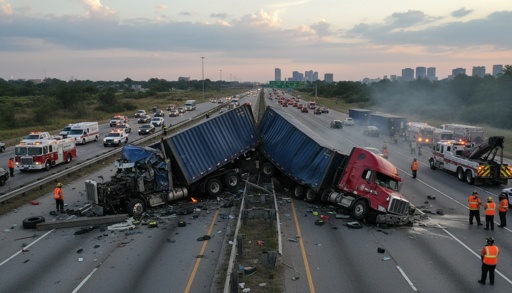
Federal investigators from the National Transportation Safety Board (NTSB) and Virginia State Police describe a charter motorcoach heading south on Interstate 95 near Stafford, Virginia, around 2:35 a.m. when it approached a construction work zone at mile marker 146.[1][2][5] Due to lane closures, vehicles were funneled into the left lane and a traffic backup had formed.[2] Officials say the bus, traveling from New York City toward North Carolina, failed to respond to the slow and stopped traffic ahead and struck the rear of the traffic queue.[2][7]
The initial impact involved a sport-utility vehicle and then cascaded into multiple additional collisions in a chain reaction across the narrowed work-zone corridor.[2][3][5][7] Federal investigators stated that the bus “plowed into the rear of slowing traffic,” while emphasizing they would not yet speculate on the ultimate cause.[2][5] The collision ultimately involved at least seven vehicles, turning a routine overnight work-zone slowdown into one of the deadliest highway crashes in recent Virginia history.[2][5][7]
The Human Toll And Emerging Legal Fallout
Virginia State Police and hospital officials report that five people were killed and more than three dozen were injured, with total hospitalizations rising as high as forty-four as patients were evaluated across multiple facilities.[1][3] Four of the dead were members of a family from Massachusetts traveling together in one vehicle, including two children aged 13 and 7, while the fifth victim was a 25‑year‑old woman riding in another car.[1][3][4] Dozens of survivors, including bus passengers, suffered injuries ranging from minor to critical.[1][3][7]
Authorities identified the bus driver as 48‑year‑old Jing S. Dong of Staten Island, New York, who had obtained his commercial driver’s license in 2024.[3][5] Virginia State Police announced that he has been charged with two counts of involuntary manslaughter, with additional charges pending, and remains hospitalized but in custody.[1][3][4][5] Each count carries a potential sentence of up to 10 years in prison if he is convicted.[3] Even as the justice system moves quickly against an individual driver, federal safety officials stress that their broader investigation into speed, fatigue, vehicle condition, and work-zone design is still in its early stages.[2][5]
Work Zones, Oversight, And The Deep Systemic Questions
National Transportation Safety Board officials say a six-member team is examining not just the bus and driver but also the construction zone’s layout, weather, traffic patterns, and how the backup formed before impact.[2][5] Investigators will review the bus’s electronic data, maintenance history, and the driver’s activities in the days leading up to the crash, as well as test for alcohol or drug involvement.[2][5] A preliminary report is expected within about 30 days, with a full final report potentially taking one to two years.[2][5]
Transportation Secretary Sean Duffy has already stirred controversy by suggesting the driver’s language skills might have been a factor and questioning whether he should have been licensed, even as NTSB officials caution they have reached no such conclusion.[2][6] For many Americans on both the left and the right, this pattern feels familiar: rapid public blame on one worker, slower answers on whether regulators, companies, and road designers created a dangerous setup in the first place.[2][5][6] As families mourn and survivors recover, the unresolved question is whether this tragedy will lead to real change in work-zone safety, commercial-driver oversight, and federal accountability—or simply fade into another headline that confirms growing distrust in a system seen as protecting elites more than everyday travelers.
Sources:
[1] Web – Bus hits cars in Virginia, killing 5 people and injuring 34, state …
[2] Web – Bus plowed into slowing traffic before deadly I-95 crash in …
[3] YouTube – New details in fatal I-95 crash as driver races manslaughter …
[4] YouTube – Virginia bus crash kills 5 including family of 4 traveling to a …
[5] YouTube – Duffy blames bus driver’s language after fatal I-95 crash
[6] YouTube – Witnesses talk after NC-based bus kills 5 in Virginia crash
[7] Web – 5 killed, 34 hurt in massive crash between bus, 6 vehicles …