
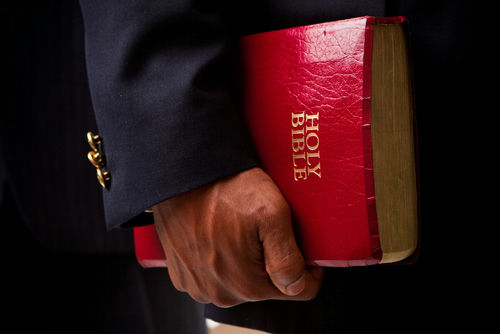
The most overlooked battlefield in American politics right now is not a campaign trail or a courtroom; it is a Bible museum in Washington, D.C., where pastors and Republicans are quietly trying to rewrite the script on child trafficking.
Story Snapshot
- Faith leaders and Republican lawmakers convened at the Museum of the Bible to focus squarely on child trafficking and child protection.[2]
- Summit organizers claimed as many as 300,000 young people are affected annually, a number that demands scrutiny as well as urgency.[2]
- Frontline advocates described how grooming usually hides in plain sight, often through trusted adults and subtle behavioral red flags.[2]
- The Museum of the Bible is emerging as a recurring venue for faith-infused policy discussions, including religious liberty and child protection.[1][3][5]
A Bible Museum Becomes A Policy War Room
The Museum of the Bible sits just off the National Mall, but on this particular day it functioned less like a tourist stop and more like a command center. Faith leaders, Republican members of Congress, and anti-trafficking advocates filled its halls for what was billed as a summit on child protection and trafficking, a gathering that signaled an alliance between scriptural conviction and hard-edged policy debate.[2] This was not a prayer breakfast; it was a strategy meeting with children’s lives explicitly on the agenda.
That venue choice was not accidental. The Museum of the Bible has already hosted high-profile conversations on religious liberty, including events where President Donald Trump and a Religious Liberty Commission used the building as a stage to discuss policy that touches schools, churches, and the public square.[1][3][5] When politicians return to the same space to talk about child trafficking, they are sending a quiet but unmistakable signal: they see faith communities as both responsible for and essential to defending vulnerable kids.
The 300,000 Claim And What It Really Tells Us
Organizers framed the summit around a stark number: as many as 300,000 young people each year are affected by trafficking and related exploitation.[2] That statistic landed like a punch, and for good reason. Yet the record here treats it as an assertion, not a documented figure linked to a specific federal dataset or peer-reviewed study.[2] From a common-sense conservative perspective, that matters. You cannot build durable policy on a number you cannot trace, even when your instincts tell you the crisis is real and intolerable.
Still, the existence of an unverifiable high-end estimate does not make the underlying threat imaginary. It reveals a familiar problem in trafficking debates: the public hates ambiguity, so advocates reach for large, memorable figures. That habit risks undermining trust over time, but it also reflects something important the summit captured. Everyone in those rooms believes the official statistics undercount the harm and that the true scale, while uncertain, warrants action now, not after a decade of perfect data collection.[2]
Where Trafficking Actually Hides: Homes, Churches, Teams
Speakers like Brittany Dunn of Safe House Project tried to drag the issue out of Hollywood plotlines and into the neighborhoods where readers live.[2] She described children who show up in churches, schools, and youth sports already carrying deep sexualized trauma, long before there is a missing-person poster.[2] Her organization, she said, helps thousands of victims each year get out, get safe, and start recovering.[2] The record here does not provide audited service data, but the patterns she described track with what practitioners nationwide report.
The summit’s experts warned that trafficking often begins with grooming by someone the child already trusts, frequently within the extended family.[2] That assertion, again, lacks a formal citation in the provided materials, but it fits what many prosecutors and social workers have seen anecdotally for years. Predators exploit access, not just opportunity. From a conservative standpoint, that should sharpen support for strong family norms, while also acknowledging a hard truth: blood relation is not an automatic guarantee of safety.
Red Flags, Fatherlessness, And The Risk Map
The conversation turned practical when advocates listed red flags: kids with unusually advanced sexual knowledge, sudden aggressive behavior, unexplained extra phones, and an almost compulsive need for validation from adults outside the home.[2] The record does not tell us how predictive these signs are, and some clearly overlap with ordinary adolescent turbulence.[2] Still, the point was not to turn parents into amateur detectives; it was to jolt complacent communities into paying closer attention to patterns they would rather ignore.
Former NFL player and activist Jack Brewer pushed further upstream, connecting trafficking vulnerability to fatherlessness and youth homelessness.[2] He claimed that more than 80 percent of vulnerable and abused children in foster care lack a father figure, though no underlying data accompanied that number.[2] Whether the exact percentage holds or not, the argument tracks with conservative common sense: when you strip boys and girls of stable fathers, you do not just break hearts—you weaken the first line of defense against predators.
From Emotional Summit To Concrete Action
The summit’s final throughline centered on collaboration: churches, nonprofits, and law enforcement officers working together instead of in silos.[2] That sounds obvious, but anyone who has watched jurisdictional turf wars or bureaucratic paralysis knows how rare true coordination can be. The record here does not detail task-force metrics or memoranda, so we cannot say whether this particular gathering will yield measurable results.[2] What we can say is that these leaders chose to be judged by outcomes, not just outrage.
Sources:
[1] Web – Trump to speak at Museum of the Bible on religious liberty in …
[2] YouTube – White House Summit on Human Trafficking
[3] Web – At Museum of the Bible, Trump Reaffirms Prayer and Religious Liberty
[5] Web – Religious Liberty Commission meets at Museum of the Bible … – WCIV