

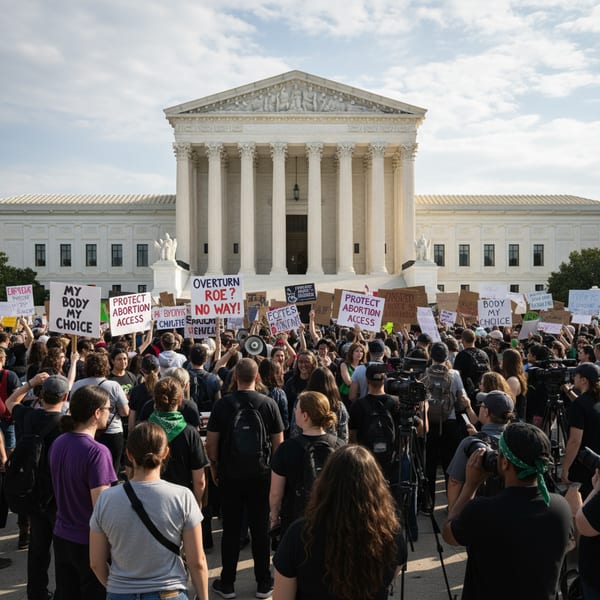
The Supreme Court’s Louisiana v. Callais decision struck down race-based redistricting, potentially placing a dozen Democrat House seats in jeopardy. Republican-led state legislatures across the South now have legal grounds to redraw congressional maps that federal courts previously forced them to create based on racial considerations.
The Supreme Court is still waiting to issue a ruling on Louisiana v Callais. It seems like we’ll get a ruling on this case in May.
— Christian Heiens 🏛 (@ChristianHeiens) April 17, 2026
As Justice Alito has yet to write a majority opinion this term, the rumor is he might write an opinion on this case that would weaken or even strike… pic.twitter.com/T1nPLc1bfY
Alabama Moves First to Redraw Maps
Alabama Attorney General Steve Marshall announced immediate plans to apply the ruling to his state’s redistricting efforts. The Supreme Court confirmed that states cannot be compelled to gerrymander by race, calling it a watershed moment that shuts the door on vote-dilution claims disguised as partisan disputes. Marshall emphasized that Alabama has fought this battle for years, arguing the Constitution forbids using race to help or harm voters when drawing districts.
Alabama Representative Terri Sewell, whose district faces potential elimination, continues defending the current maps as necessary for Black representation. However, the new ruling applies across multiple Southern states including Louisiana, Georgia, North Carolina, and South Carolina. Each state contains at least one Democrat seat in court-ordered, Black-majority districts that may now be redrawn by Republican legislatures.
Nationwide Domino Effect Begins
Adam Kincaid, executive director of the National Republican Redistricting Trust, told reporters he expects the Supreme Court to issue orders on Alabama redistricting cases soon. The implications extend beyond individual states, as lower courts must now recalibrate pending cases under Section 2 of the Voting Rights Act in light of this decision.
What This Means for Congressional Control
Democrats currently hold 213 House seats, with approximately 12 sitting in districts that exist only because federal courts mandated their creation. The ruling transforms these court-ordered districts from protected status to legally redrawable territory. Republican state legislatures can now act through redistricting committees without seeking new voters or waiting for demographic shifts. The Supreme Court acknowledged the South has made extraordinary progress since the Voting Rights Act era, declaring laws designed for a different time do not reflect present reality.