
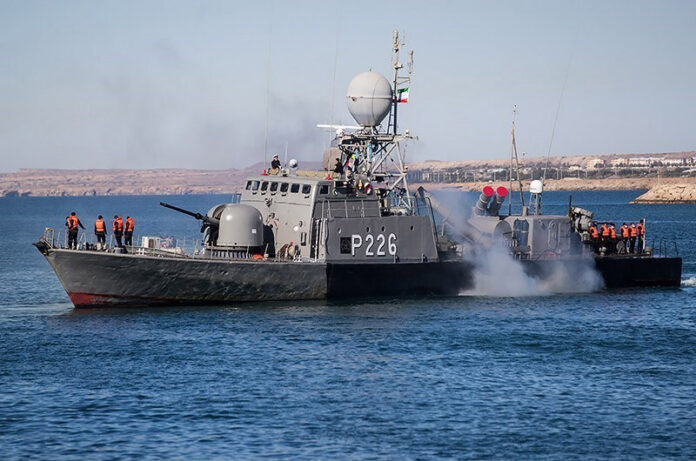
President Trump ordered U.S. forces to attack Iranian vessels mining the Strait of Hormuz as the maritime standoff escalates, leaving a crucial global trade route at an effective standstill. The U.S. has redirected 33 vessels since the blockade began, while Americans brace for higher gas prices as the confrontation intensifies.
Military Action and Economic Fallout
U.S. Central Command confirmed that 33 vessels have been redirected since the blockade against Iranian ports began. American forces also boarded another tanker allegedly involved in smuggling Iranian oil. When asked about higher gas prices, Trump acknowledged Americans should expect increases “for a little while,” defending the action by stating the alternative is “Iran without a nuclear weapon that’s going to try and blow up one of our cities.” The president emphasized there’s “nothing worse” than a nuclear weapon capable of destroying multiple American cities.
Iranian Leadership Responds
Iran’s Foreign Minister Abbas Araghchi declared that “the battlefield and diplomacy are fully coordinated fronts in the same war,” stating Iranians are “all united, more than ever before.” His comments appeared to counter Trump’s social media post claiming “infighting” between hardliners and moderates inside Iran. Supreme Leader Mojtaba Khamenei warned Iranians to remain vigilant against enemy “media operations” targeting national unity and security. Trump later posted that he’s “possibly the least pressured person ever to be in this position,” adding “The clock is ticking” for Iran.
Diplomatic Developments
The next round of ambassador-level talks between Israel and Lebanon will now take place at the White House, with Trump personally greeting both representatives. Secretary of State Marco Rubio will join the discussions, which were originally scheduled for the State Department. The talks follow last Tuesday’s historic meeting that produced a fragile 10-day ceasefire between the two nations. U.S. Ambassador to Israel Mike Huckabee is returning to Washington to participate in the negotiations.
Regional Tensions Continue
Ahead of the diplomatic talks, Israeli strikes in southern Lebanon reportedly killed Lebanese journalist Amal Khalil and wounded another journalist accompanying her. The incident occurred as tensions remain high despite the ceasefire agreement. In Lebanon, a 21-year-old woman displaced from a Hezbollah stronghold in southern Beirut described fleeing her home as bombs fell nearby. The refugee facility where she now stays houses 400 people, including 120 children, highlighting the humanitarian impact of the ongoing regional conflicts.